- Dead Ball Analytics
- Posts
- The Void at Camp Nou: Who Dares to Replace Robert Lewandowski?
The Void at Camp Nou: Who Dares to Replace Robert Lewandowski?
The Doppel Scout's final list: Which player is the future, and which is just a fantasy?

Dead Ball Analytics
October 31, 2025
Few players in modern football history have defined a position with the clinical precision and longevity of Robert Lewandowski. His elegant movement, natural athleticism, and composed finishing allowed him to dominate across different leagues. He adapted to every system without losing his style or consistency. But even for a player of his caliber, greatness must eventually evolve. You hardly notice when a golden chapter begins to turn its final pages, but his story feels like it’s entering that stage, still defined by quality, yet written with a softer rhythm. The Polish striker’s current contract with Barcelona runs until August 2026, and he faces an uncertain future. During the recent international break, he suffered a tear in his left hamstring (biceps femoris) in Poland’s World Cup Qualifier against Lithuania. The only consolation for Barcelona fans after the painful 2-1 El Clásico defeat to Real Madrid is the return of their star striker to training. Lewandowski’s leadership and presence go far beyond scoring goals; they are vital in boosting the team’s morale, especially during challenging periods.
Without Lewandowski, Hansi Flick faced a challenging puzzle: how to keep the attack fresh and effective without him. Against Girona, the German manager deployed academy product Antonio Fernandez Casino (17) up front, while for El Clásico, he opted to start Ferran Torres. These experiments offered a short-term glimpse into the squad’s productivity without Lewandowski. However, they did not negate the fact that the club must build a deeper strategy for the Polish star’s long-term successor ahead of next summer’s inevitable changes. Robert Lewandowski’s absence is a stark reminder that even a club with Europe’s finest attack, which led the top five leagues with 102 goals last season, cannot rely solely on past glory. Even for the highest-scoring team, the challenge of planning for life after a legend is now unavoidable. So, what comes after Lewandowski? A long-term investment in the next No.9? A well-planned project born out of foresight rather than urgency?
We decided to put ourselves in the shoes of Barça’s transfer committee and, with the help of the Doppel Scout tool, explore possible replacements for Robert Lewandowski. The combination of Barcelona’s well-documented financial constraints and the market disruption expected from the 2026 World Cup means the transfer committee faces a complex challenge where easy solutions simply do not exist. Also, before diving into potential candidates, it is essential to understand the significance of the position that needs filling. Players like Lewandowski’s unique blend of consistency, longevity, and clinical finishing are a statistical anomaly. To find his successor, we first need to define the elite profile that has kept him at the top for so many years.
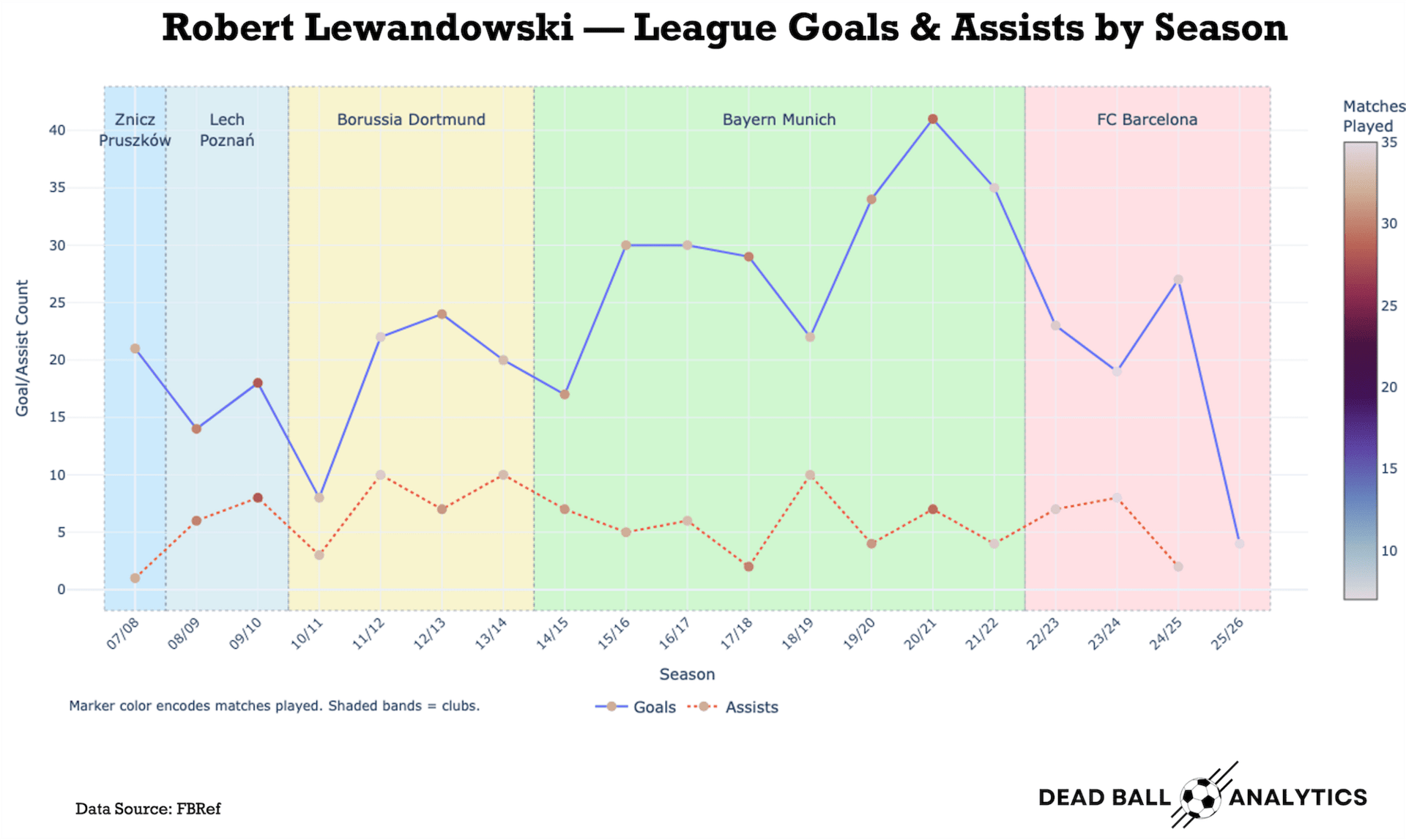
Figure 1: Robert Lewandowski’s League Goals and Assists (2007–08 to Present)
The Gold Standard No. 9: Defining Lewandowski’s Elite Profile
When the history of the modern No. 9 is written, Robert Lewandowski’s chapter will be defined by an almost inhuman consistency. Forget the accolades for a moment; the raw data alone tells a powerful story of dominance: 614 goals and 155 assists in 832 club appearances. The jersey changed from Znicz to Dortmund, from Bayern to Barcelona, but the central, undeniable truth of his progress and hunger for scoring remained the same.
While Lewandowski’s career has a long list of broken records, the 2019–20 Champions League campaign stands as his magnum opus, which stands as a season of perfection. Not only was he integral in their Champions League win as part of a historic Treble, but he was also crowned the Best FIFA Men’s Player and UEFA Men’s Player of the Year. In a relentless 10-game run, he delivered a near-mythical performance, scoring 15 goals and providing 5 assists, coming tantalizingly close to Ronaldo’s single-season record. Especially noteworthy, this was the season Bayern Munich became the only club in European Cup history to lift the trophy without dropping a single point.
This success was built during the tough and unusual period of the COVID-19 pandemic, when the tournament changed to single-match knockouts from the quarter-finals on. In other words, he played fewer minutes, fewer opportunities, yet his efficiency only sharpened. He finished the campaign averaging a goal or assist every 44.4 minutes, a clinical, unmatched rate that remains the best goal involvement figure in Champions League history for any player with 10 or more contributions.
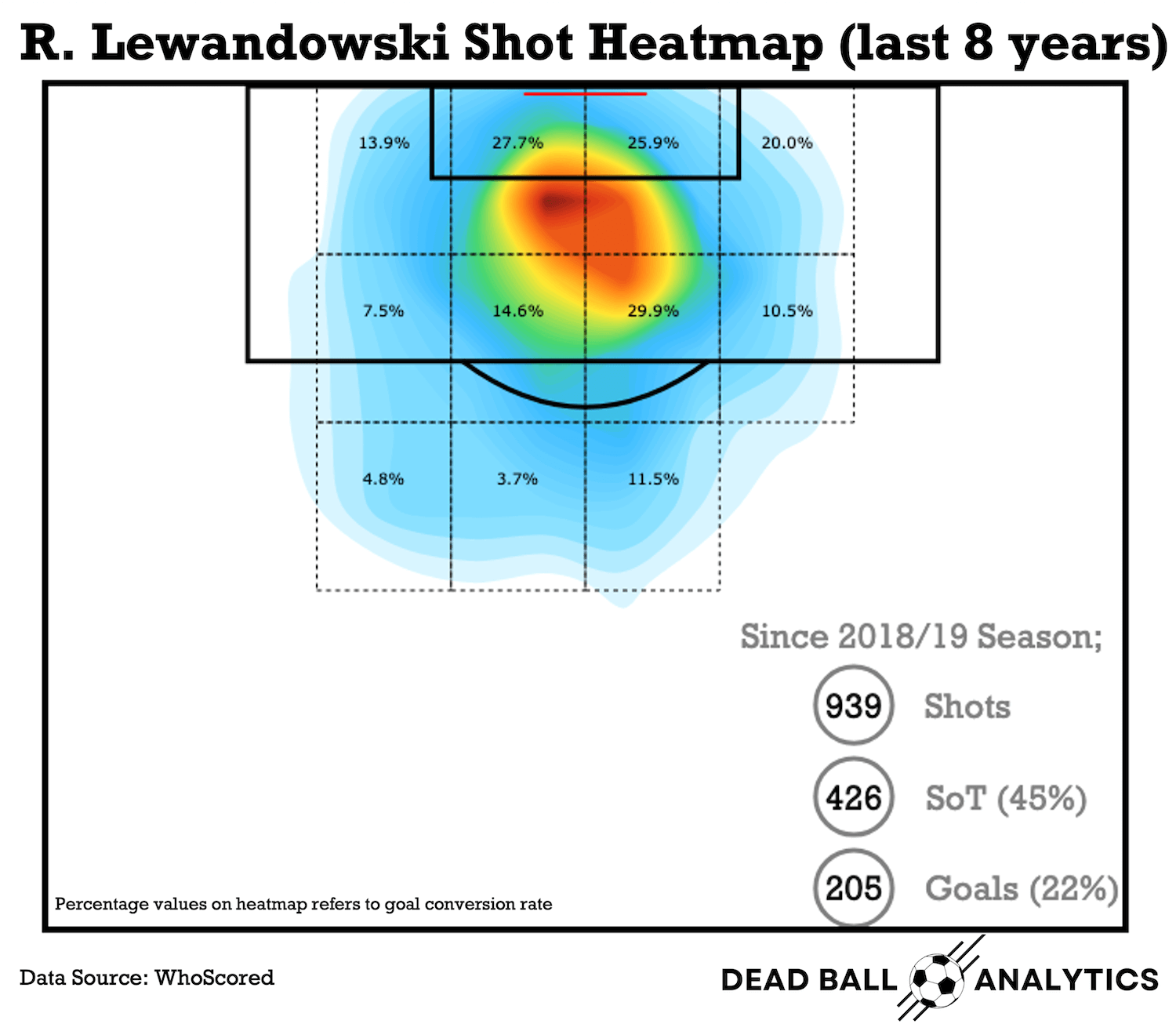
Figure 2: Robert Lewandowski Shot Heatmap of Last 8 Seasons
Robert Lewandowski’s legacy is not built on spectacular, long-range strikes, but on a mastery of the penalty box, which is clearly visible in his Shot Map. Around 70% of his shots come from inside the box. The map illustrates a striker who has perfected the art of finding the best possible position for the highest-percentage finish. This is not just instinct; it is a clinical intelligence that allows him to read the game two steps ahead of the defence. This combination of mental sharpness and physical power, the engine behind his legendary performance, is what makes him so difficult to replace. It is this unique profile that allowed him to maintain a world-class level across different teams and tactical systems for over a decade. To fully grasp the extent of his dominance, we must now compare his 2019-20 campaign alongside the all-time greats in terms of Goals Involvement in a Single Champions League Season.
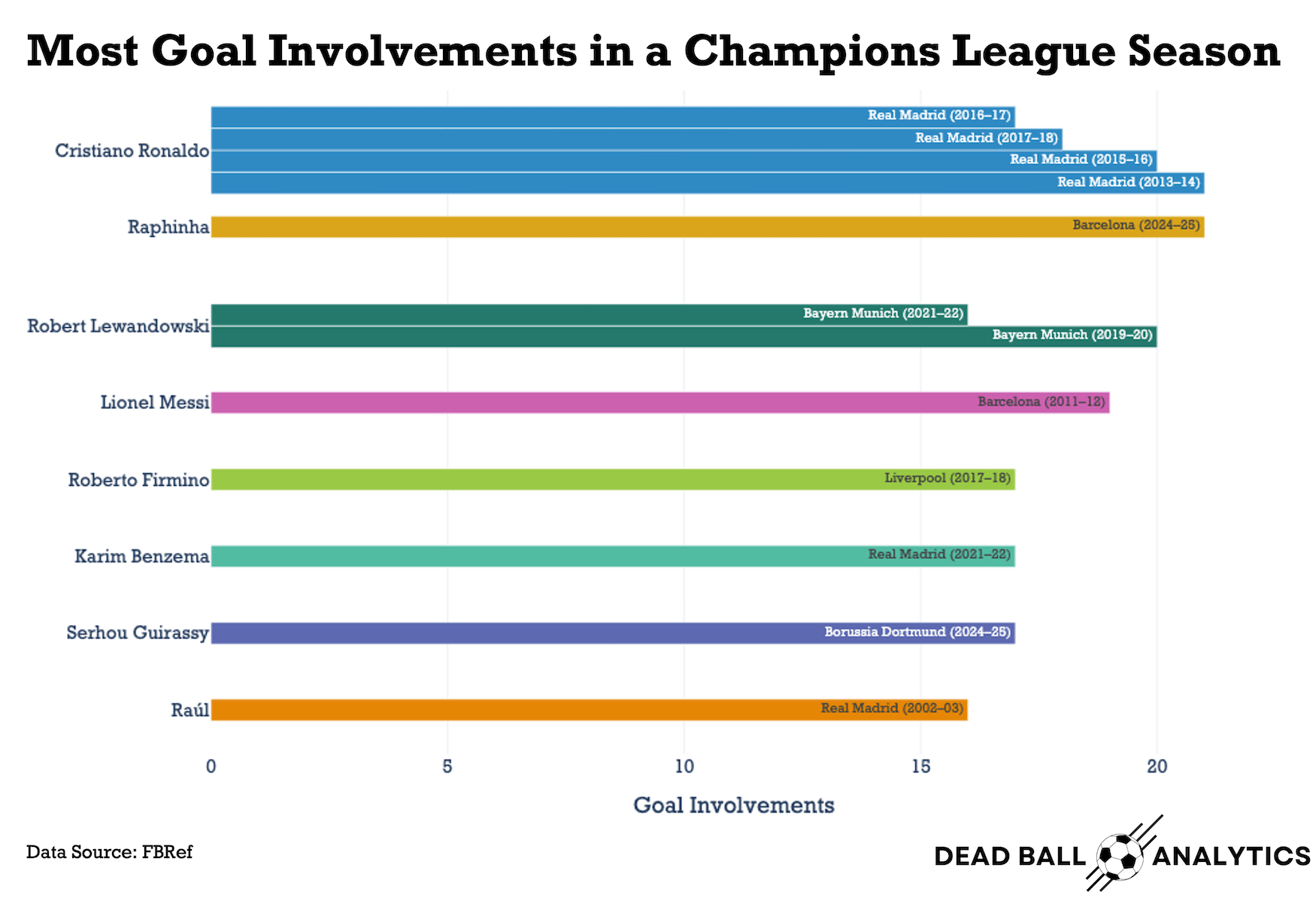
Figure 3: Most Goal Involvements by a Player in a Champions League Season
The Softening Rhythm: Lewandowski’s Battle for Longevity
The list presented in Figure 3 is a testament to the fact that Lewandowski’s 2019-20 season is one among the greatest individual campaigns in the tournament’s history. However, as the clock ticks and the inevitable questions about his longevity arise, the man himself remains defiant. It is a strange paradox: a player whose excellence is defined by consistency is now being questioned for the one thing he cannot control, time. When asked about the constant speculation surrounding his age, Lewandowski’s response was clear and resolute: “I’m not saying I’m a victim of my age, but there are people who use it against me. I feel in excellent shape! I don’t expect to play 90 minutes every match, and my view of football has changed a little, but when I’m on the pitch, I know I can still do great things.” This statement perfectly encapsulates the challenge: his performance is elite, but the narrative around his future is dictated by his birth certificate.
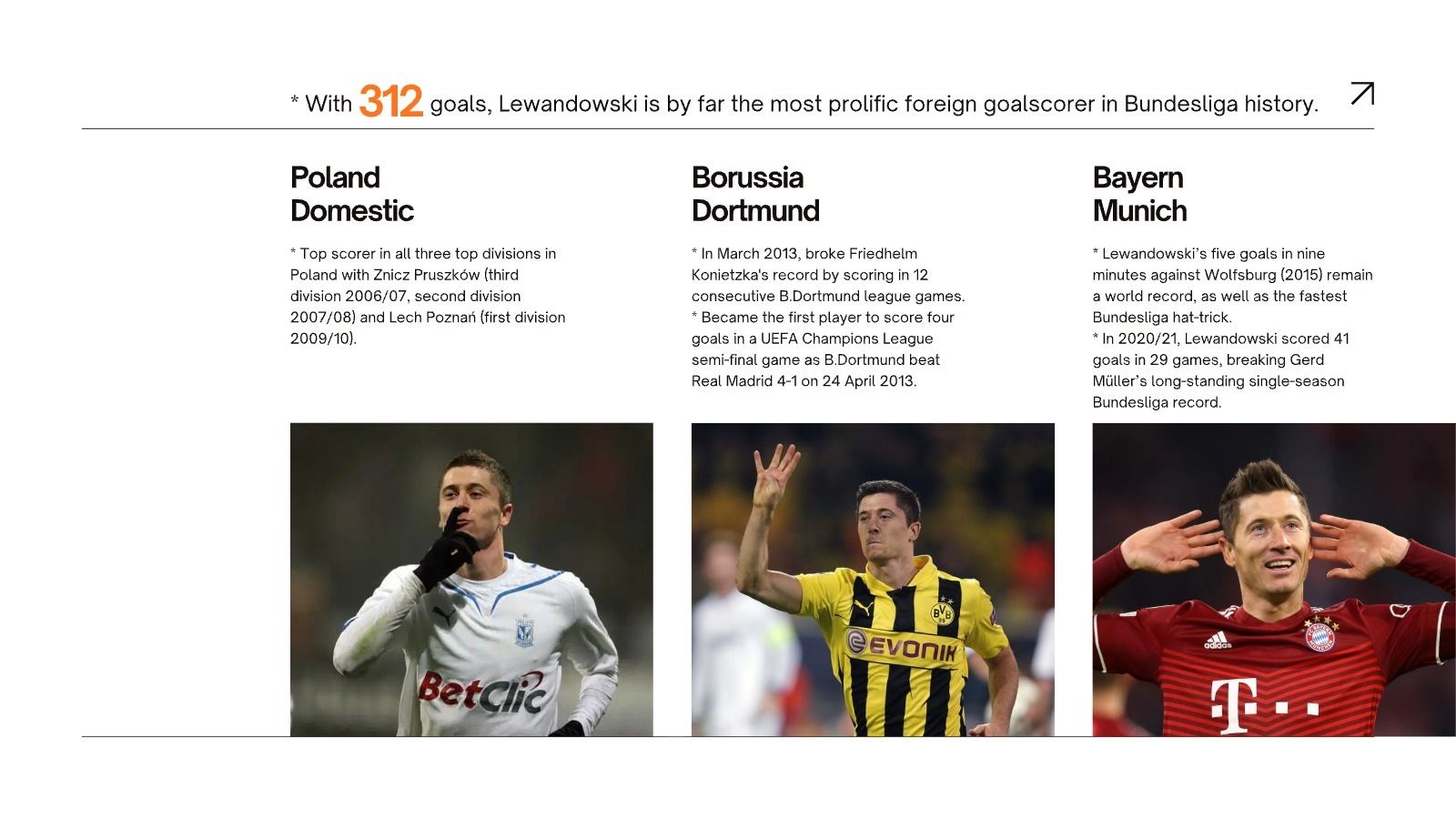
Figure 4: Robert Lewandowski’s club career highlights
We wanted to bring together some of Robert Lewandowski’s record-breaking achievements just to remind ourselves what a truly lethal striker we’ve had the chance to watch over the years. The highlights captured in the visual above are merely a snapshot of a career defined by tireless goal-scoring and a passion for winning. His own words offer the final clue to Barcelona’s dilemma. Robert Lewandowski understands the changing dynamics of modern football and his own role within it: “I don’t expect to play 90 every match, and my view of football has changed a little, but when I’m on the field, I know I can do great.” This is the crux of the issue: Barcelona is not looking to replace a declining player, but a player who, despite acknowledging his evolving role, still believes he can deliver greatness. For the purpose of this analysis, however, we must now turn our attention from the legend’s past to the club’s future. The next era is upon us, and the question is: who could step up as a forward with a similar impact, or where might Barcelona look next?
A New Financial Reality: The End of the Crisis Era
While the search for Robert Lewandowski’s successor is a sporting imperative, it is inextricably linked to the club’s economic health. Contrary to the narrative of recent years, FC Barcelona has officially turned the page on one of the most turbulent chapters in its recent history. The Catalan club presented a positive financial balance for the second consecutive year, signaling a sustainable and ambitious future both on and off the pitch.
According to the latest financial report, Barcelona closed the season with €994 million in operating income and an operating profit of €2 million. This turnaround, achieved despite playing the entire season away from Camp Nou, signals a return to commitment. With the return to the new Spotify Camp Nou expected in 2026 (always delayed but very soon), the club anticipates annual revenues surpassing €1.075 billion. This shift in economic reality fundamentally changes the transfer committee’s mandate. They are no longer surviving under the desperation of the financial crisis, but under the banner of sustainable growth. The focus shifts from finding the cheapest option to finding the right option that aligns with this new ambition.
The Doppel Scout Report: Defining the Next No. 9 Profile
The challenge of replacing a generational talent like Robert Lewandowski is not just a scouting task; it is a complex data science problem. This complexity is compounded by the current internal debate at the club. Sporting director Deco recently suggested that being “obsessed with signing a number 9” would be a mistake, pointing to tactical evolution and internal solutions. While this stance reflects a necessary focus on adaptability and mobility, it risks overlooking the sheer, consistent volume of performance that Lewandowski guarantees.
Rather than relying on subjective opinions and the limitations of traditional metrics, and to objectively test whether a traditional No. 9 is truly dispensable, we deployed the Doppel Scout tool. (Perhaps Deco has a point about not being ‘obsessed,’ but when you’re replacing a player of Lewandowski’s calibre, you don’t just need a good feeling; you need the cold, concrete data to back it up.)
Beyond Stats
The Doppel Scout is not just a similarity calculator; it is a sophisticated player similarity engine developed to identify players with deep stylistic and statistical proximity to a given target. As the tool’s creators note, player comparison isn’t linear. Traditional scouting metrics fail to capture the game’s complexity, which is why the Doppel Scout was built to treat player comparison like a recipe, mixing:
Similarity Metrics: Statistical proximity across a wide range of actions.
Role Clustering: Ensuring a true positional and tactical fit.
Consistency Checks: Multi-season reliability, a key attribute of Lewandowski himself.
Graph-based Relationships: Contextualising performance within team systems.
The model strikes a balance between Style vs. Production, Direction vs. Magnitude, and Normalised vs. Raw Performance, ensuring it captures the full picture, not just isolated brilliance.
This initial, purely analytical sweep, designed to find the closest statistical and stylistic matches, returned a comprehensive list of 88 potential successors from across Europe’s top leagues.
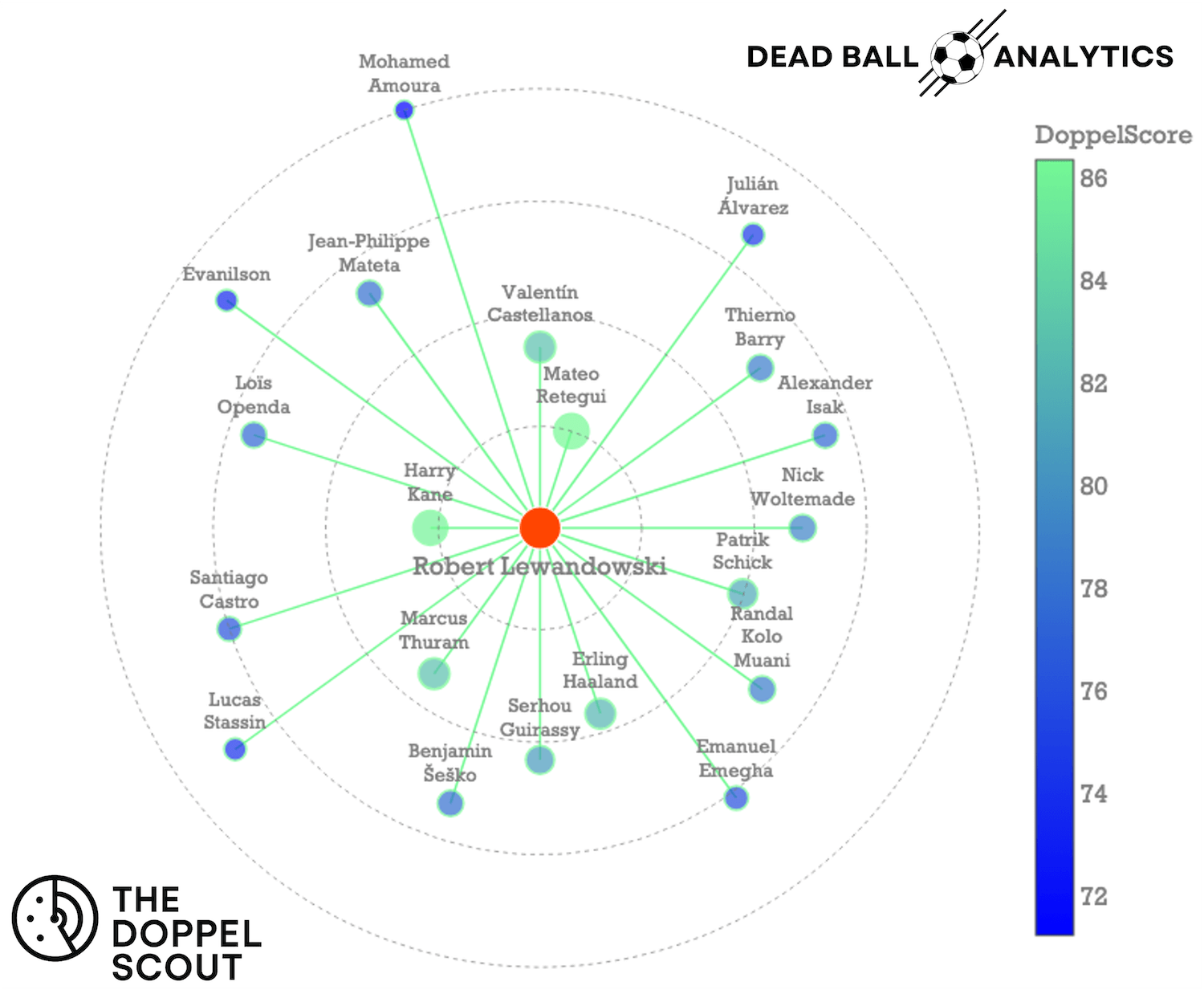
Figure 5: The Initial Sweep: Top 20 Candidates Ranked by Doppel Scout Similarity Score to Robert Lewandowski
Applying the Strategic Filter
To ensure our analysis was not merely theoretical, we applied a layer of strategic reality based on the club’s renewed economic health and long-term goals. We filtered the initial 88-player list based on three key criteria:
Financial Viability & Strategic Investment: We assessed market value not as a barrier, but as an investment. The focus shifted to identifying players whose high potential justifies a significant, sustainable outlay.
Long-Term Investment: We prioritised younger talent (generally under 25) with high growth potential, aligning with the need for a long-term successor.
Transfer Difficulty: We assessed contract situations, favouring players whose current club relationships or expiring contracts offer a realistic window for negotiation.
This rigorous process narrowed the field to an elite shortlist of 5 names that represent the best statistical matches for the next No. 9, which should be on Barcelona’s transfer committee’s desk this summer.
The Final Five: The Statistical Elite and the Financial Wall
Mateo Retegui (Doppel Score: 86.36)
Mateo Retegui tops the list, proving to be the closest statistical match to Robert Lewandowski’s profile. The Argentina-born Italian was the Serie A top scorer last season with 25 goals and regularly represents the Italian national team. While he has a four-year contract with Al-Qadsiah, we are confident he will return to Europe within a few years. Despite a potentially high transfer cost, his poacher style and ruthless channel runs offer the highest reward potential.
Serhou Guirassy (Doppel Score: 80.53)
Serhou Guirassy has proven his pedigree in the Bundesliga through consistent, elite-level goal production. His remarkable consecutive scoring streak (8), surpassed only by Aubameyang (10) and Lewandowski (15) among non-German players, is a testament to this consistency. This is a compelling narrative, as both Aubameyang and Lewandowski have worn the jerseys of Borussia Dortmund and Barcelona. His ability to drop into midfield and make timely runs aligns perfectly with Barcelona’s style of play. This tactical fit also suggests he could be an exciting, high-impact solution. Furthermore, he is already experienced with the demands of a major European league, positioning him as a strong long-term option.
Nick Woltemade (Doppel Score: 79.16)
“Big Nick” is one of Doppel Scout favorite, with his high goals-per-90 ratio and clinical finishing that mirrors Robert Lewandowski’s efficiency. His recent €75 million transfer from Stuttgart to Newcastle makes him virtually unattainable in the short term. Nevertheless, Barcelona’s long-term vision aligns with his profile that promises versatility and tactical adaptability. We retain him on this list to represent the astronomical ‘what-if’ scenario and the objective benchmark for a player whose profile is a near-perfect match.
Thierno Barry (Doppel Score: 78.73)
Thierno Barry, signed by Everton for €32 million this summer, has struggled to fully adapt to the Premier League’s demands. We know it’s too early to make any judgments, but this is the current situation. At just 22, he is a highly promising talent, strong in the air, excellent at carrying the ball, and possesses a high shot-on-dribble ability. Crucially, he already knows the Spanish football scene. If his adaptation issues persist, a unique opportunity may arise for Barcelona next summer. From a risk-mitigation standpoint, he meets all the necessary conditions for a club like Barcelona to step in following a turbulent period at Everton.
Julian Alvarez (Doppel Score: 74.62)
It is no surprise that Julian Alvarez is listed in our top five, considering his superior skill set. He is a true modern forward, combining intelligent movement and link-up play with a clinical finishing ability from both feet and long distances. However, any approach quickly runs into a financial wall: he is under contract until 2030, and Atletico would not want to sell him under +100 million euros. While he is a perfect match for the Doppel Scout model, and a true tactical DNA fit, the transfer market reality makes him a fantasy for now. Yet, in the volatile world of football transfers, a fantasy can quickly become a reality.
Final Recommendation: The Path Forward
The Doppel Scout analysis provides a clear hierarchy of candidates, however, the final decision must be filtered through the lens of the club’s financial and strategic realities. This final shortlist of five represents the absolute statistical elite, but also the most challenging transfer targets. Nick Woltemade and Julian Álvarez are effectively unattainable fantasies due to their recent high-value transfers and financial barriers. Mateo Retegui and Serhou Guirassy offer the highest immediate reward but come with significant transfer cost and complexity. Therefore, the most pragmatic and strategically sound path lies in exploiting a unique market opportunity. Thierno Barry emerges as the optimal strategic target. His youth, explosive pace, and potential as a long-term investment are already confirmed by his statistical suitability. Crucially, his current adaptation struggles at Everton create a potential window for a risk-mitigated acquisition next summer. By focusing on Barry, Barcelona can secure a talent whose profile is validated by the data, at a moment when the transfer risk is temporarily lowered.
Cover Photo Credit: Juan Manuel Serrano Arce / Getty Images
Thank you for reading! We know it’s been a while since our last deep dive, but we’re back and committed to delivering more of this data-driven analysis on a regular basis. If you’ve read this far, we’d love to hear your thoughts in the comments below. Your engagement helps us keep the lights on and the models running!