- Dead Ball Analytics
- Posts
- Rising Stars Expected to Skyrocket in Value Over the Next Six Months
Rising Stars Expected to Skyrocket in Value Over the Next Six Months
Scouting Rising Stars – Part 1

Dead Ball Analytics
December 18, 2025
The transfer window is a high-stakes poker game, and the smartest clubs aren’t just betting on what they see; they’re betting on what the data predicts. The CIES Football Observatory has dropped its latest report, projecting which players’ market value is likely to increase in the next six months. The report is built on a large-scale statistical model that combines performance data, contract variables, club prestige, and market dynamics. At its core lies a Multiple Linear Regression framework built on thousands of real-world transfers, highlighting the key factors shaping market value. For readers curious about the data behind these projections, the full methodology is available here.
Behind the Numbers: How Future Stars Are Identified
The logic behind the prediction begins with the engine that powers it. The CIES model is far from a simple algorithm; it is a robust, globally relevant framework built on Multiple Linear Regression (MLR). This statistical technique quantifies a player’s market worth with a scientific rigor that is indispensable in the modern game. The model’s foundation is built on a massive dataset, analyzing 8,389 transfers involving 6,347 players between July 2014 and March 2024. The CIES methodology is defined as much by what it excludes as what it includes:
•Exclusion of Loan-to-Buy: Transfers concluded after a loan period are systematically excluded, as the fee is usually pre-negotiated and does not reflect the player’s true market value at the time of the transfer.
•Exclusion of Buy-Out Clauses: Paid transfers resulting from a buy-out clause are also excluded, as the fee is a contractual ceiling, not a true reflection of the market’s willingness to pay.
•Focus on Indemnity: The dependent variable is the indemnity negotiated by the clubs, whether fixed or conditional, projected at 100% of the player’s economic rights.
The MLR model then weighs five core characteristics to determine a player’s value and, by extension, their potential for growth:
1.Player’s Characteristics: Age, position, and international status.
2.Performance: Individual metrics like minutes played, starting XI rate, and goal frequency, alongside collective team results.
3.Labor: Contract length and previous transfer fees.
4.Clubs’ Characteristics: Both the releasing and engaging clubs’ prestige and financial power.
5.Time: The season or year of the transfer, accounting for market inflation.
The Top Risers: Who’s Next?
The top-10 list highlights a diverse mix of well-known young talents and emerging prospects. Yan Diomandé leads the large list with his rapid expected growth. Nick Woltemade and Kenan Yıldız are elite performers, and their rising market value confirms their world-class path. Other significant high-percentage risers include Christian Kofane, Can Uzun, and Bazoumana Touré, all playing in the Bundesliga. Meanwhile, the presence of names like Malick Diouf (West Ham) and Franco Mastantuono (Real Madrid) highlights the model’s ability to spot potential across Europe’s biggest clubs and most competitive leagues.
When we introduced Yan Diomande & Christian Kofane & El Hadji Malick Diouf last summer, we knew we were about to witness this scenario. Those players went through a much faster adaptation process than we assumed and exceeded our expectations. Yan Diomandé is currently valued at €45.7 million, with CIES projecting a remarkable +€40.1 million increase to €85.8 million by June 2026. Christian Kofane has been signed for €5.25 million by Bayer Leverkusen, and his current value is €25.5 million euro, and his estimated value for next summer is €48.6 million euro (91% increase). The snapshot below highlights the players expected to see the biggest increases in long-term total value.

Figure 1: Players with the biggest transfer value growth, Dec 2025 – Jun 2026 (€M)
The Deep Dive: Analyzing the Market Across Leagues
The current projection assumes the player will maintain their recent form, both individually and as part of their team. It identifies players currently outperforming their valuation and likely to see a significant value adjustment. We can look at the research from many angles, but the most engaging approach is to break down the highest value increases by league. This approach allows us to see exactly how on-pitch performance is translating into market value across Europe’s elite divisions. We’re going to start with the Outliers, the players performing outside of Europe’s Big Five Leagues. The most surprising and notable stories usually come from those leagues. Now, grab a hot drink, settle in, and explore choices of the full list.

Figure 2: Players with the biggest transfer value growth outside Europe’s Big Five
Christ Inao Oulai (Trabzonspor)
Trabzonspor’s €5.5 million signing of a player with just 18 appearances in France’s second division last summer looked like a huge gamble. It took just 4 months for this gamble to prove one of the smartest transfers of the summer. The Ivorian midfielder is now tipped for a massive +142% increase in value, making him the highest-rising player outside the Big Five. Christ Inao Oulai (b. 2006) is a JMG Academy graduate and a versatile midfielder with a real influence in transitional play. He shines in tight spaces, combining composure on the ball with effective dribbling and ball progression. His energy both defensively and offensively allows him to contribute in quick transitions, making him a well-rounded midfielder. Trabzonspor fans have reason to be excited, but it’s clear that within a short time, his talent will likely attract offers from Europe’s top leagues. Monitored by Ivory Coast coach Emerse Faé for his recent performances, Christ Inao Oulai has been named in the Africa Cup of Nations squad together with the other young names in the list Yan Diomandé, Amad Diallo, and Bazoumana Touré. In short, Oulai’s story shows that top-tier talent can emerge from unexpected places.
Kauã Elias (Shakhtar Donetsk)
The Brazilian connection at Shakhtar Donetsk is a well-known path, but the story of Kauã Elias is a proof of the club’s meticulous recruitment strategy. This wasn’t a snap decision; the club reportedly tracked the young forward for nearly two years at Fluminense before securing his signature in February 2025. Kauã Elias is a composed finisher who has an excellent technique and flair. He is capable of linking play under pressure and using his body very well to shield the ball from defenders. He has smart positioning, and he is competent at finishing in the box. He has a very smooth transition of adapting to life in Ukraine thanks to other Brazilian players in the squad
Now, we should speak about Shakhtar Donetsk coach Arda Turan. Average football fans might remember him from his time at Atlético Madrid and Barcelona, a quick flashback: the legendary 2013-14 La Liga season, when Arda Turan’s Atlético won the title in a league dominated by the world’s two best players, Cristiano Ronaldo at Real Madrid and Lionel Messi at Barcelona. In his first season at Shakhtar Donetsk, Arda Turan has shown strong connections with young players like Kauã Elias, Luca Meirelles, Martins da Silva Newerton providing clear signals of his impact on their development. He played same key leadership role with players Berke Özer (Lille), Ahmed Kutucu (Galatasaray), and Metehan Baltacı (Galatasaray) in Eyüpspor’s rise to the Turkish Super League and is now developing that experience globally. Perhaps this is just the opening paragraph for a future piece on the next generation of elite young managers, definitely a story worth exploring later.
Back to Elias: the Brazilian striker’s value has skyrocketed in a remarkably short period. The CIES model projects a 43% value increase, pushing his expected transfer fee to a robust €33.3 million by the summer of 2026. Life is full of strange connections and coincidences, and who knows, perhaps Elias will find himself moving to his next big club alongside a manager he already knows.
Luca Meirelles (Shakhtar Donetsk)
We continue with another Brazilian and Shakhtar Donetsk forward. Luca Meirelles is an 18-year-old mobile striker, offers slightly more box presence and finishing ability than his compatriot Kauã Elias. Despite receiving fewer time (844 minutes) across ten Ukrainian League, two Ukrainian Cup, and five UEFA Conference League matches, he has been highly effective, scoring 8 goals. While there are many positives about Luca, the most notable weakness is his physical capacity, which is expected to improve over time. This is common for young players from the Brazilian league, but clear progress is already visible compared to the season’s start. His market value is expected to rise from 9.6 million euro to 17.5 million euro in just six months. This is a sharp 82% increase and gives a clue about his potential. The CIES numbers only tell part of the story; the impressive pool of talent emerging from Shakhtar Donetsk clearly reflects a club operating within a coherent philosophy and a football identity.
Konstantinos Karetsas (KRC Genk)
Konstantinos Karetsas is a 17-year-old Greek prodigy whose profile extends far beyond the Jupiler Pro League. Karetsas combines high-level technical skill with exceptional vision and game intelligence. He’s ambidextrous, a set-piece threat, and capable of scoring from distance, while his ability to create space and play line-breaking passes defines a modern midfield profile coveted by top clubs. Naturally, as with any young talent there are some areas still in development. His finishing, aerial duels, and defensive contribution require improvement, though at his age, these are completely typical growth points. The decision-making, technique, and game intelligence are already elite. On the international stage with Greece, at just 17 years and 124 days, he became the youngest goalscorer in UEFA Nations League history, surpassing Spain’s Gavi. Karetsas is on the brink of an important phase of his career, and all signs suggest he’s progressing to become one of Europe’s talented midfielders of the next generation. His expected market value for the summer of 2026 is estimated to reach 51.6 million euros, reflecting an 18% increase.
Franculino Gluda Djú (Midtjylland)
Franculino Gluda Djú quietly left Benfica’s academy two years ago for Midtjylland, where he found the perfect environment to develop and make rapid progress. He is a powerful, quick, left-footed forward with great stamina and agility. This season, his scoring pace (22 goals, 5 assists) and high performance put him in the same conversation as Europe’s elites, thus his transfer value skyrocketed. Midtjylland board quickly realised what they had and extended his contract until June 2029. However, it will not be so easy to keep him in the long term. Clubs like Dortmund, Liverpool, Aston Villa, and Bayern Munich have all monitoring him closely. Bayern Munich’s interest is also concrete, with sporting director Christoph Freund reportedly making a strong internal case for the young striker. Midtjylland’s sporting director, Jacob Larsen, confirmed: “FC Bayern is one of several interested clubs, that’s probably right.” While a January transfer is unlikely, Djú’s name will remain a hot topic for a massive summer move.
Max Dowman (Arsenal)
The list is packed with highly promising young talents and at the very top of it we have 15-year-old wonderkid Max Dowman. With extraordinary market growth of 446%, his current €1.3 million valuation is expected to reach around €7.1 million by summer 2026. He impressed in Arsenal pre-season camp and made his senior Arsenal debut in August as the club’s second-youngest first-team player, behind teammate Ethan Nwaneri. Later, he became the youngest player in UEFA Champions League history, playing at 15 years and 308 days in Arsenal’s 3–0 win over Slavia Prague, breaking Youssoufa Moukoko’s record (16 years, 18 days). It’s obvious that Max will be one of the most spoken talents in the upcoming years. Arsenal have reached an agreement with him to sign scholarship terms with a professional contract expected to follow when he turns 17.
Speaking on the club’s approach to managing such a young talent, Mikel Arteta underlined the importance of structure and protection around the player: “Preparing a very good understanding of his new situation and all the things that are different in his life. We need to change his times, his education, his allocation, where he is with his family. His diet is different, his sleep pattern is different, the training load is different. The amount of information, pressure and exposure is different, so we have to manage a lot of factors.” Rather than rushing talent, the club focuses on stability, education, and balance so when the professional contract comes, it’s built on the right foundations.
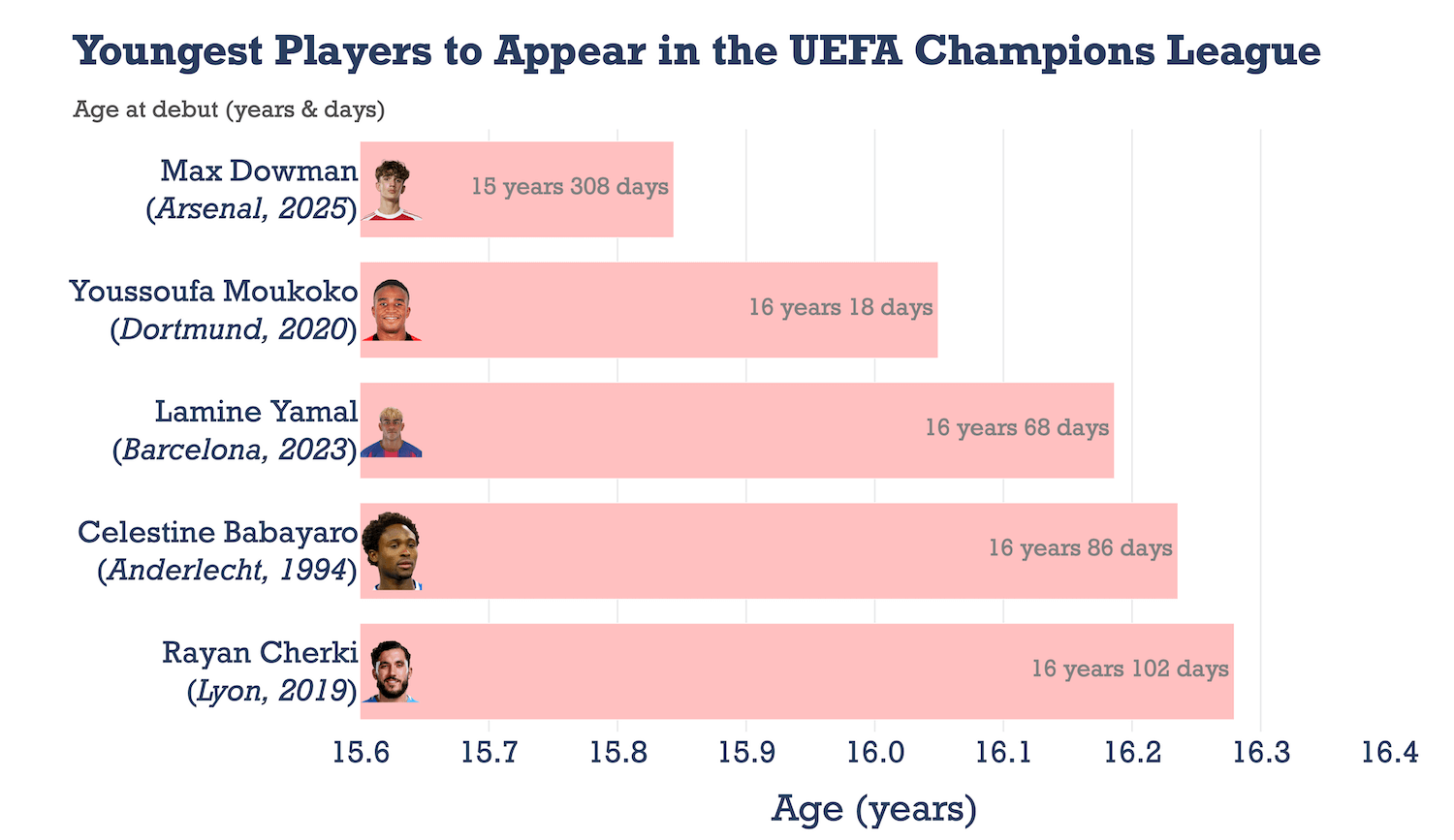
Figure 3: The youngest players in UEFA Champions League history
Enzo Le Fée (Sunderland)
Enzo Le Fée is a diminutive, all-round midfielder whose football intelligence far outweighs his modest stature. He joined on loan from AS Roma in January 2025, with a mandatory purchase obligation triggered after Sunderland’s promotion through the Championship playoffs. The move reunited him with Régis Le Bris, who had coached him at Lorient. Within Sunderland’s midfield trio, alongside Granit Xhaka and Noah Sadiki, Le Fée adds technical composure and tactical control that trouble opponents. His versatility has been a key advantage for the team. He has played as: Left central midfielder (8 appearances), left winger (3), number ten (3), left central midfielder (1) and even as a striker on one occasion.
Technically polished, tactically disciplined, defensively reliable, Enzo is excellent at linking play. The numbers mirror what you see on the field. Compared to positional players across Big Five Leagues, UEFA Champions League, and Europa League, over the last 365 days (based on 1,125 minutes played), Le Fée ranks exceptionally high in defensive contribution: Tackles per game: 2.64 (99th percentile), tackles won: 1.68 (99th percentile), blocks: 1.68 (96th percentile), clearances: 1.44 (95th percentile). He is a monster of progressive passes, which we like most. With these all positive trends, his market value is estimated to increase %115. Sunderland has gained a very important player they are likely to rely on for many years.

Figure 4: Enzo Le Fée – Pass Heatmap, Positions & 20m+ Progressive Passes
Eli Junior Kroupi (Bournemouth)
Bournemouth is owned by Black Knight Group, which also holds ownership stakes in FC Lorient, Auckland FC, and Moreirense FC. This multi-club continent structure enables a coordinated approach to talent identification, development, and value creation across different leagues. Within this framework, Eli Junior Kroupi shines out as a textbook example of how the MCO model can be effectively implemented. Eli Junior Kroupi made his debut on the final day of the 2022–23 season with Lorient at just 16 years and 345 days old, but it was last season that he began to show his real potential. He was influential in Lorient’s promotion-winning season (2024-25) scoring 23 goals and providing 2 assists. After such an impressive season, he moved to the upper league under the same ownership. Bournemouth previously benefited from Lorient’s resources by signing Dango Ouattara, and Eli Junior Kroupi seems to be taking a similar route.
Despite playing just 424 Premier League minutes, he has already made a decisive contribution for Bournemouth, scoring 5 goals from only 2.4 xG. His dribbling threat and outstanding finishing make him an exceptional impact substitute, capable of changing games in limited minutes. Based on his development path, his market value is projected to increase by approximately 20% by the summer of 2026, potentially reaching €60.3 million. Above all, working with Andoni Iraola gives him a big boost, and he is expected to develop and mature over the next few years.
Robin Roefs (Sunderland)
Sunderland acquired Robin Roefs for an initial £9 million, plus a potential £2.5 million in add-ons. That’s an absolute bargain. In the 2024-25 season, he started 32 Eredivisie matches for NEC Nijmegen, keeping 10 clean sheets and helping the club qualify for the 2025–26 UEFA Conference League. Now, in his debut Premier League season with Sunderland, he has quickly adapted and has impressed everyone with his performances. His 76.4% save percentage is a credit to his quality, ranking him second behind the World Cup winner Emiliano Martinez (79.1%). He also ranks as the Premier League’s top goalkeeper in goal-kick distance with an average delivery of 65 meters.
In the modern game, where the goalkeeper is often the first playmaker, Roefs’ technical ability, particularly his dominant left foot, is what distinguishes him. The above moment from the Liverpool match in the 90+4th minute is one of the best examples of his ball-playing ability. The market has already reacted to his meteoric rise. While an 88% increase in his valuation was expected, his initial transfer fee of €20.4 million is estimated to rise to €38.4 million. Sunderland clearly has an elite-level goalkeeper on their hands, and Roefs is already proving to be a key reason why the Black Cats enjoy a dream Premier League season.
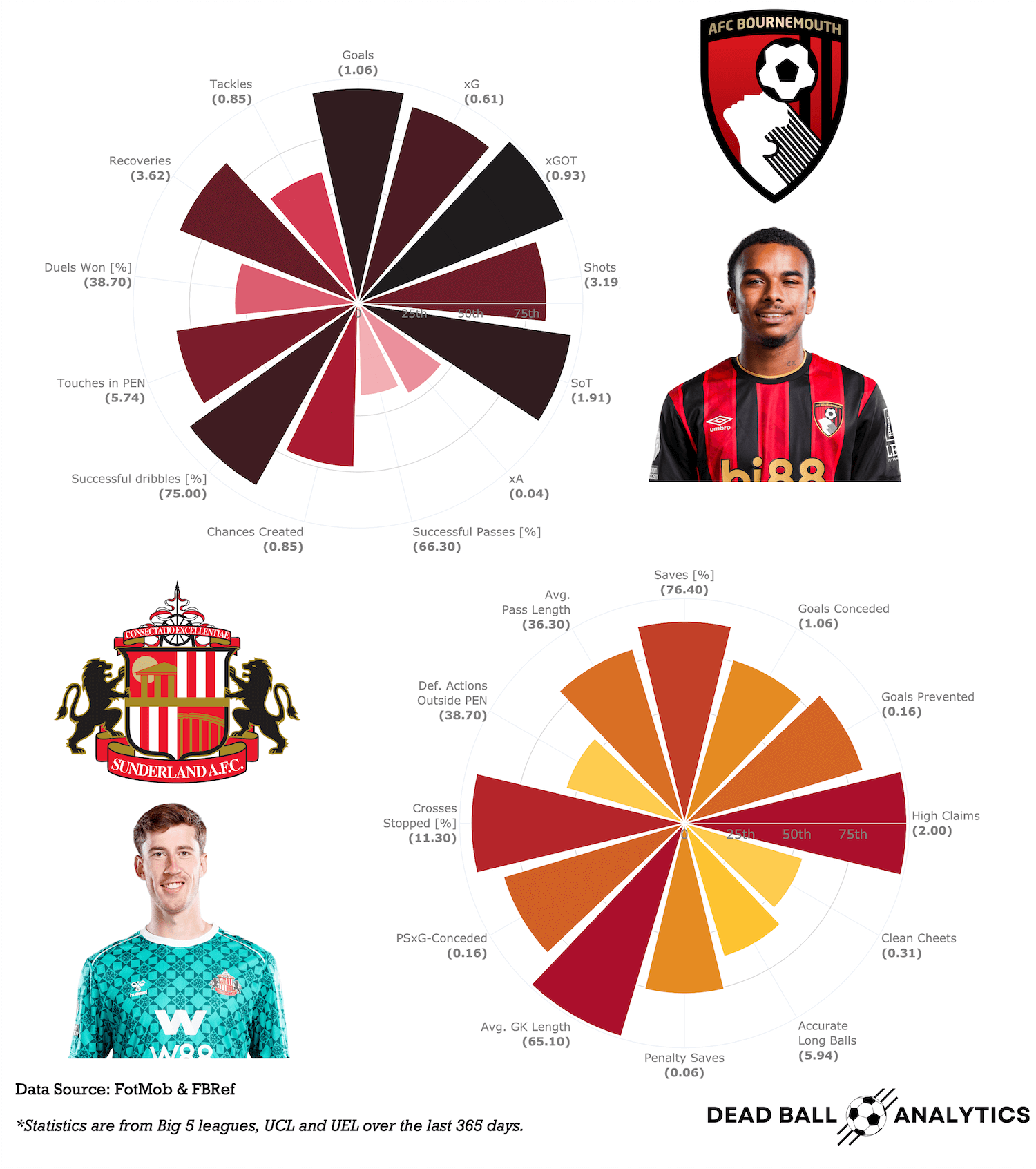
Figure 5: Radar Charts – Eli Junior Kroupi & Robin Roefs
Fisnik Asllani (Hoffenheim)
From the 2. Bundesliga to a first-team spot in the top division, Fisnik Asllani adapted to the higher level easier than expected. During his loan at Elversberg last season, he scored 18 goals and provided 8 assists in 33 league games, becoming the team’s top scorer. Earlier this season, back at Hoffenheim, he immediately became a starter, showing that his success in the second tier was just the beginning.
Fisnik Asslani is the classic number nine, tall at 1.91 m, quick, smart in his positioning and clinical finisher in the box. While most of his goals last season came from his right foot, he is ambidextrous, making his game more versatile and harder to predict. His xG map below shows his capability both inside and outside the box, with +2.3 Goals-xG since the 2024-25 season.
The data from the last 365 days whispers the profile of an elite forward who shines in the most crucial areas. Asllani is not a static target man; he is a key part of Hoffenheim’s build-up and pressing system. This is best illustrated by his defensive output: an outstanding 3.19 ball recoveries per 90 minutes (97th percentile). His heatmap shows a forward who is constantly engaged, pressing high, and winning the ball back, proving he’s more than just a goalscorer. Furthermore, his involvement in direct play is significant, with 2.69 progressive passes (90th percentile) and 6.88 progressive passes received (85th percentile), indicating a player who actively seeks to move the ball forward and receive it.
This blend of clinical finishing, high work rate, mobility, and two-footedness makes him special. His synergy with experienced figures like Andrej Kramaric and the connection of Tim Lemperle has been a key factor of Hoffenheim’s success this season. Fisnik Asllani’s current market valuation of €29.1 million is estimated to increase to €42.4 million by the summer of 2026. This is 46% market growth. He improves every season, and a move to a bigger stage could give him the platform to become an elite striker in Europe.

Figure 6: Fisnik Asllani – Shots & xG Map
Yan Diomande (RB Leipzig)
We have previously analysed Yan Diomande’s brilliance, but his explosive season and the massive market valuation have triggered a fresh, deeper reassessment unavoidable. He’s exciting to watch on the pitch, and the numbers tell the same story. Checking his last 365 days of data, based on 1,433 minutes of play, Diomande’s numbers place him among the elite of his positional peers across the Big 5 Leagues, the Champions League, and the Europa League. What makes this brilliance remarkable is that 41.67% of that data was accumulated while playing for a relegated La Liga side, Leganes, last season.
Yan Diomande is not your typical winger; he is a progressive force. His metrics illustrate a player who consistently breaks lines and disrupts defences. He averages an elite 6.22 progressive passes per 90 minutes (97th percentile) and is a constant threat in the final third, evidenced by 3.45 carries into the final third (97th percentile). Crucially, he possesses the rare ability to turn possession into genuine danger, with 0.82 goal-creating actions (96th percentile) and 5.21 shot-creating actions (93rd percentile). His signature move is the ability to take the ball, beat the opponent, and unbalance the opposition. With 3.33 carries into the penalty area per game (97th percentile), he ticks every box for a modern wide attacker.
In his debut Bundesliga season, Diomande has not just adapted; he has signaled his arrival as a really valuable asset. While Michael Olise and Antonio Nusa have seen higher percentage increases in market value 144.2% and 86.1% respectively, Yan Diomande’s 85.8% increase places him third among the Bundesliga players. However, the narrative shifts when considering the absolute financial impact. Michael Olise and Antonio Nusa were already high-value assets with substantial initial transfer fees. Yan Diomande, starting from a lower base, has delivered the most significant absolute market value increase among the trio, adding a remarkable €40.1 million to his valuation in 6 months. We’re witnessing a star emerge in European football. His progress is obvious, the numbers make sense of it, and the market agrees. A nine-figure move after the 2026 World Cup wouldn’t be a shock.
Lennart Karl (Bayern Munich)
Another star emerges, climbing the ranks faster than anyone expects. Born in 2008, Lennart Karl is not just a prospect; he is a gifted dribbler whose game is driven by a precise left foot and remarkable on-field intelligence. He poses an elite goal threat with efficient finishing and contributes consistently to chance creation, showing comfort operating between the lines. What sets him apart is his defensive work rate: Karl pairs attacking output with impressive ball-winning ability, making him a rare combination of scorer, creator, and disruptor. A modern, dynamic player whose impact goes far beyond the final action. Lennart started six of Bayern Munich’s last seven games. At just 17 years and 290 days, he became the youngest player to score in three consecutive Champions League appearances (Club Brugge, Sporting CP, and Arsenal). This is not just potential; this is elite performance on the biggest stage. The whispers of a senior national team call-up are already growing louder, and it’s not a surprise to watch him in the 2026 World Cup with Germany this summer. The financial metrics confirm the rise of a star. Karl’s current market value of €35.5 million is projected to reach €50.5 million by the summer transfer window, reflecting a remarkable 42% rise. This valuation spike, driven by his increasing and consistent playing time in a title-contending Bayern side, provides all the necessary data points: we are witnessing the birth of a new global superstar.

Figure 7: Radar Charts – Yan Diomandé & Lennart Karl
We’ll wrap up Part 1 here, and tomorrow we’ll continue with players from Serie A and Ligue 1. If you’ve made it this far and enjoyed the read, feel free to share it with your football nerd friend. Cheers!